Reformation
For editorial fashion brands: lookbook product pages, quickshop, inline size-guide accordion.
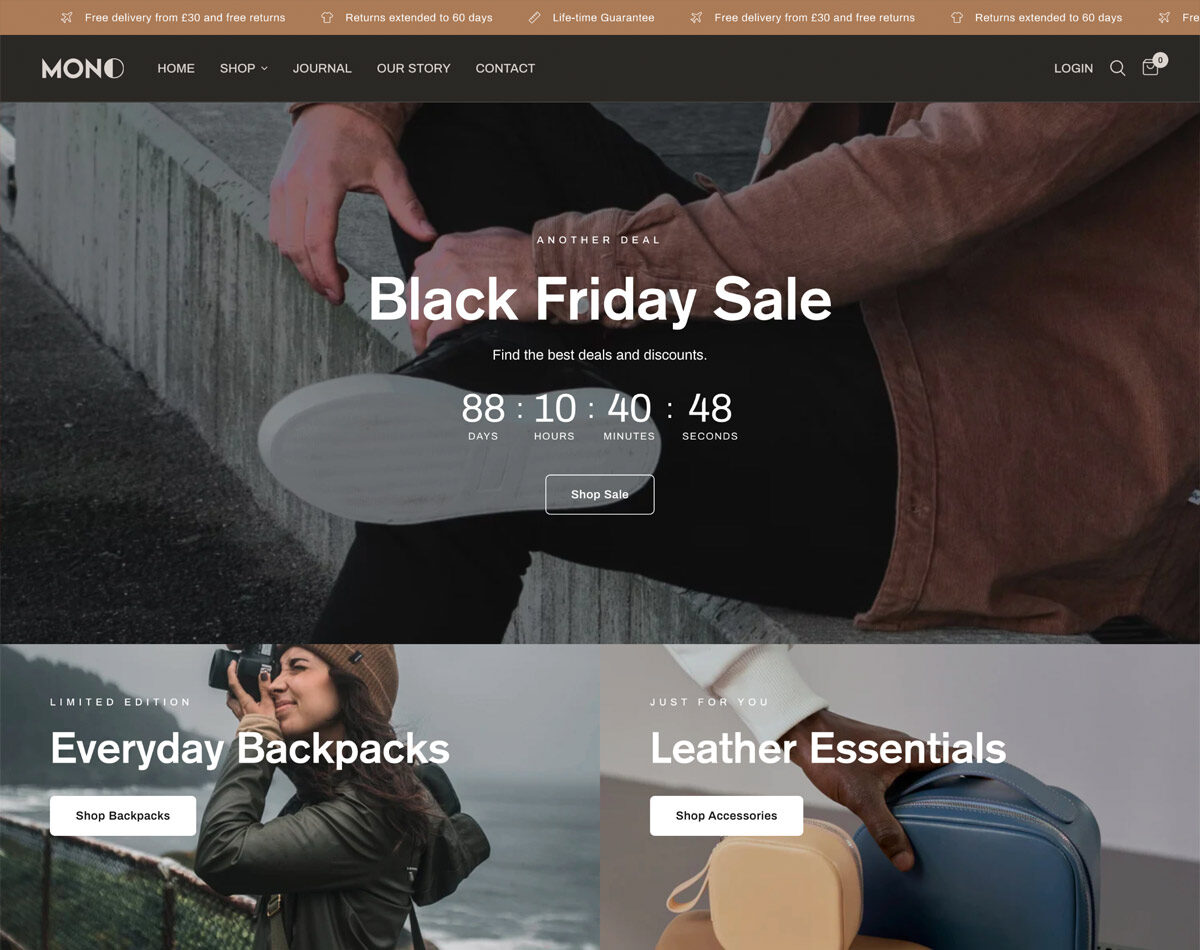
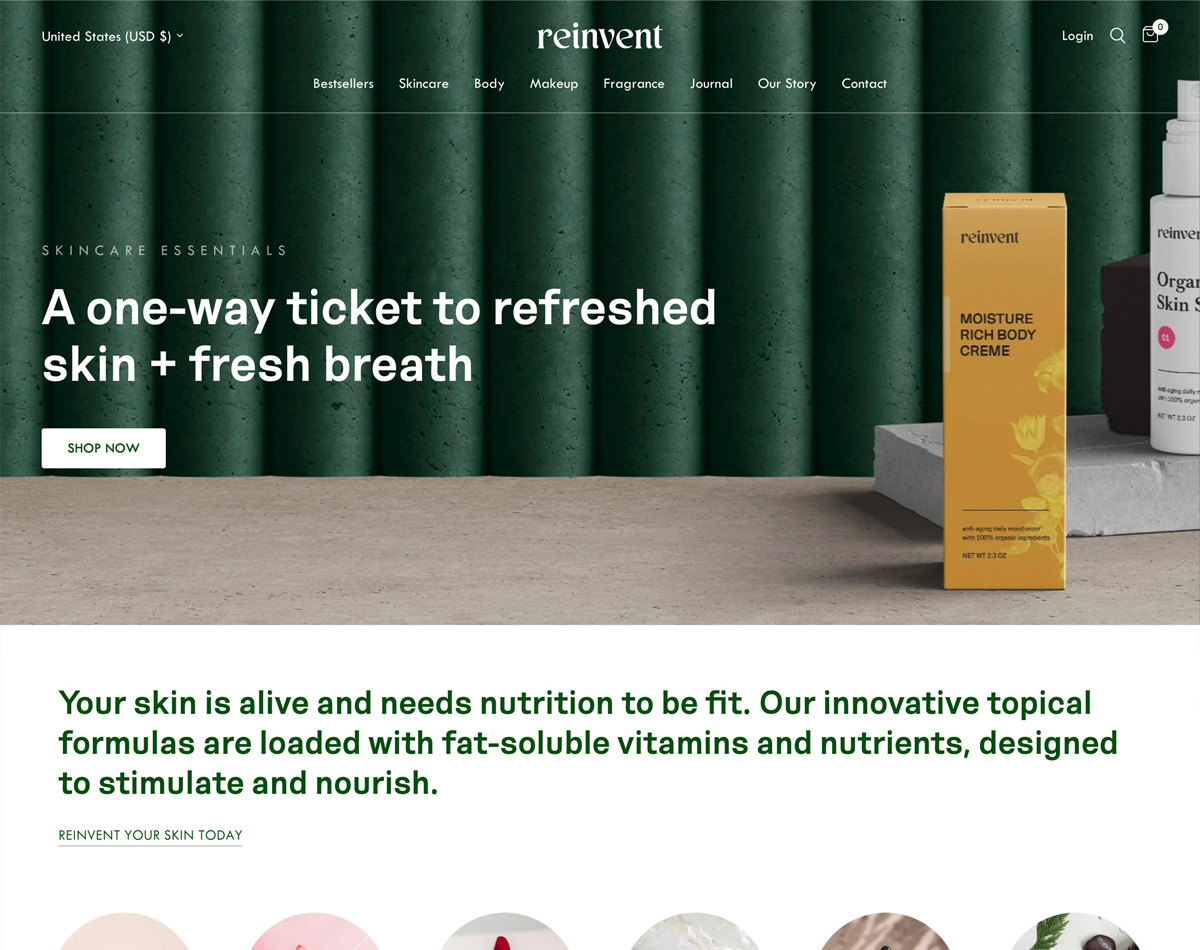
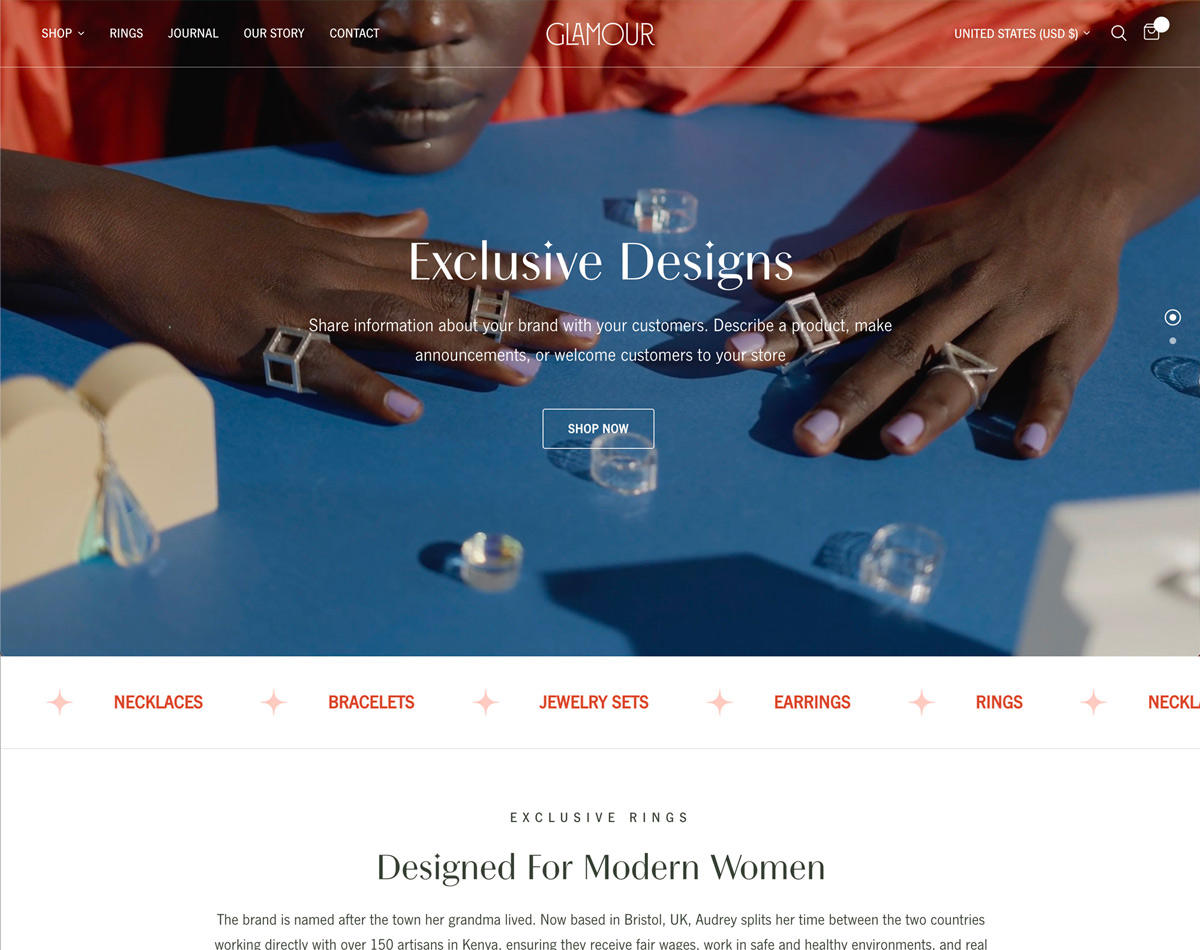
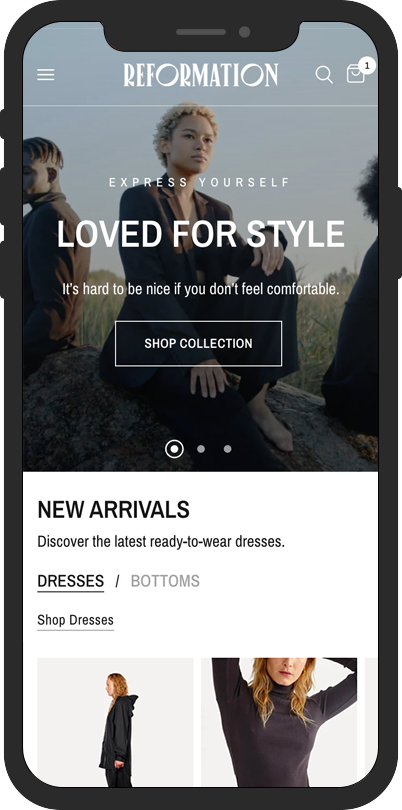


Features
Reviews
-
customer-support
Kudos to the Team for going the extra mile! We had CSS issues with a third-party service and the Support Team suggested a fix, although it wasn’t related to the theme build. The response was quick from start to finish!
-
customizability
I’ve been using Shopify for 5+ years and have tried countless themes. This one is hands-down the best! The features are amazing and the developers are incredibly talented and helpful. Highly recommend this theme to everyone!
-
feature-availability
This theme has heaps of cool features but also doesn’t affect site speed and SEO. This theme is also very flexible on how you want it to design the website. Would highly recommend. Support is also great if you have any questions and/or need extra code to remove or add features.
Example Screens
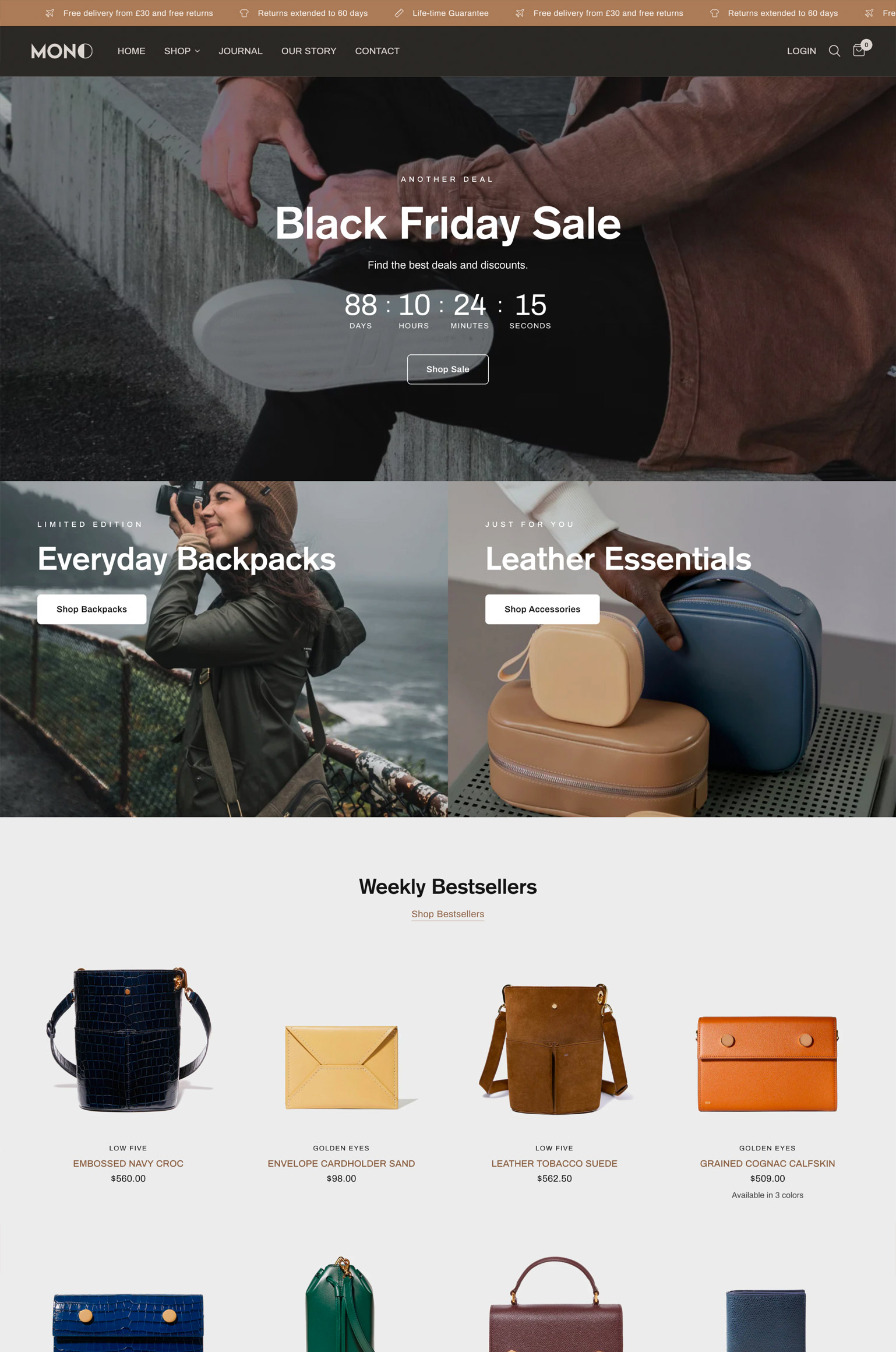
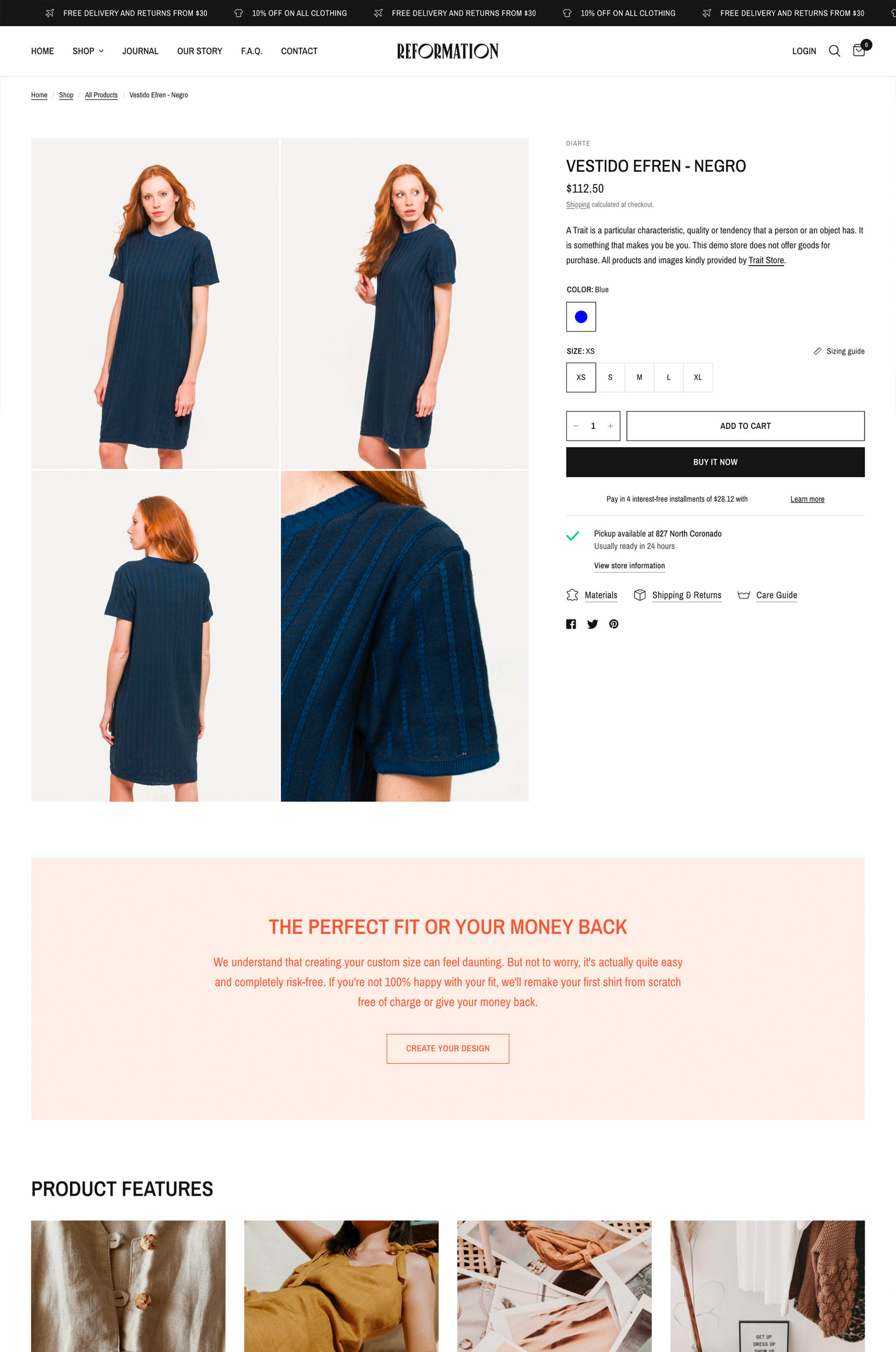
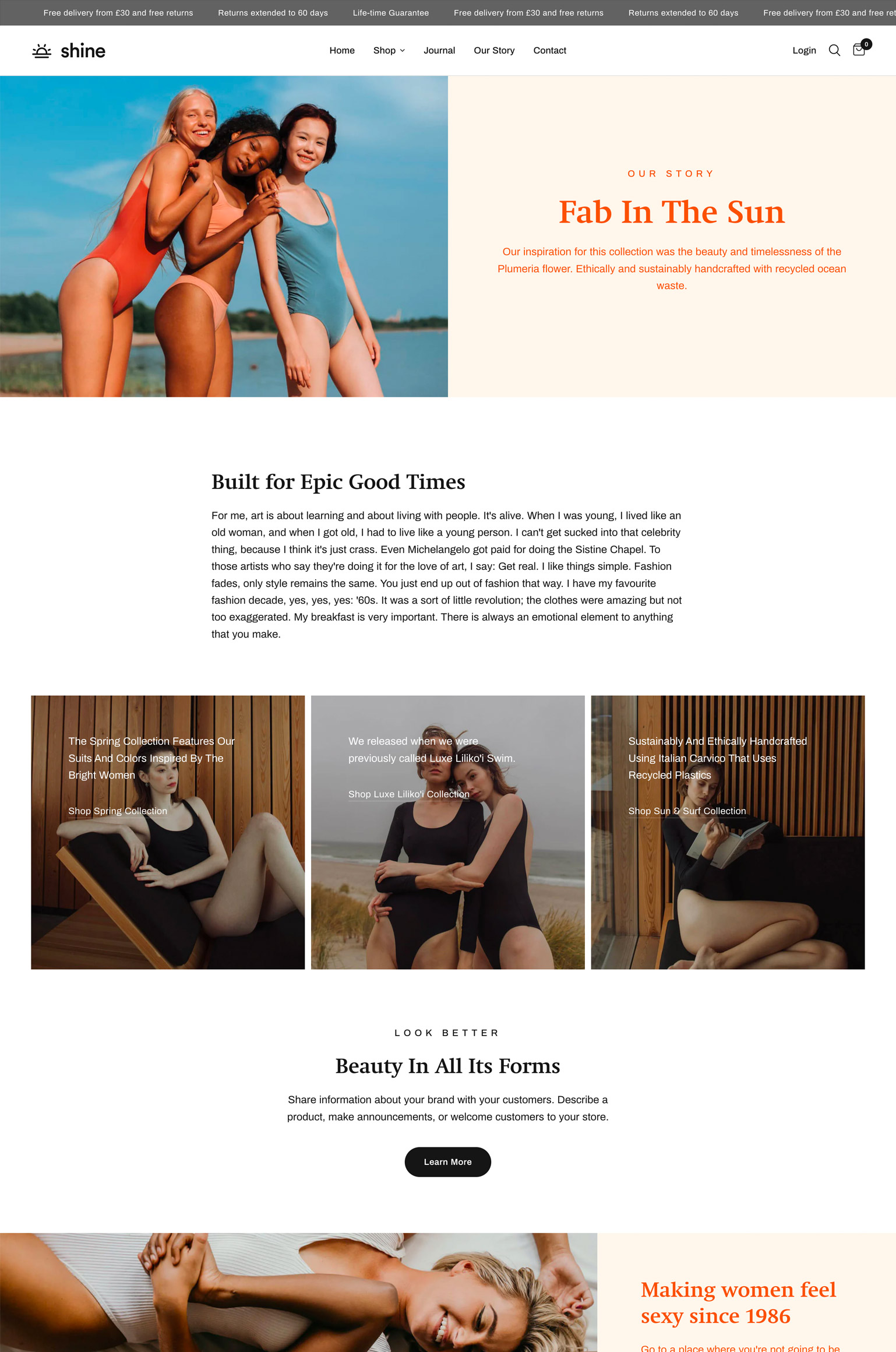
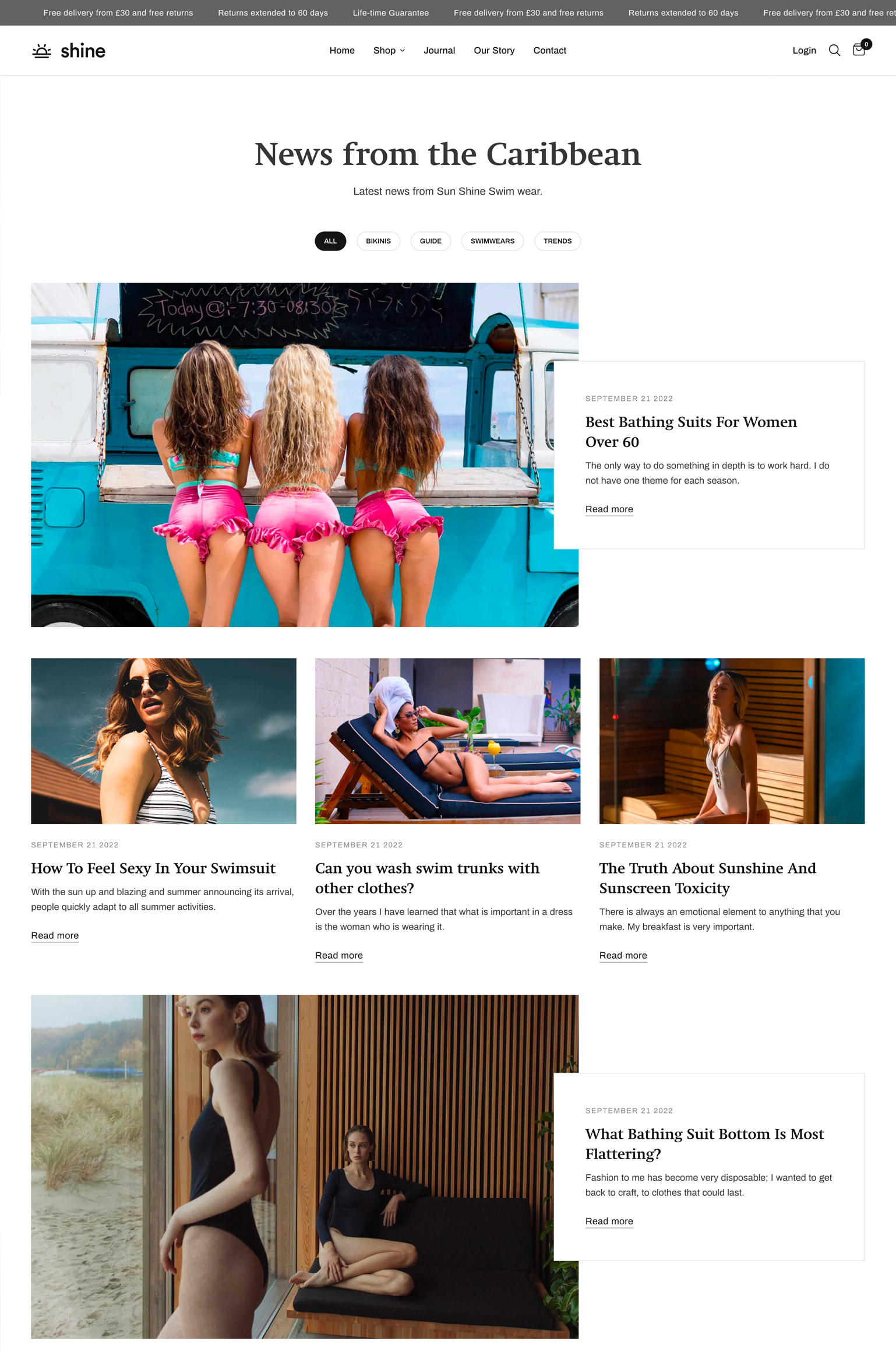
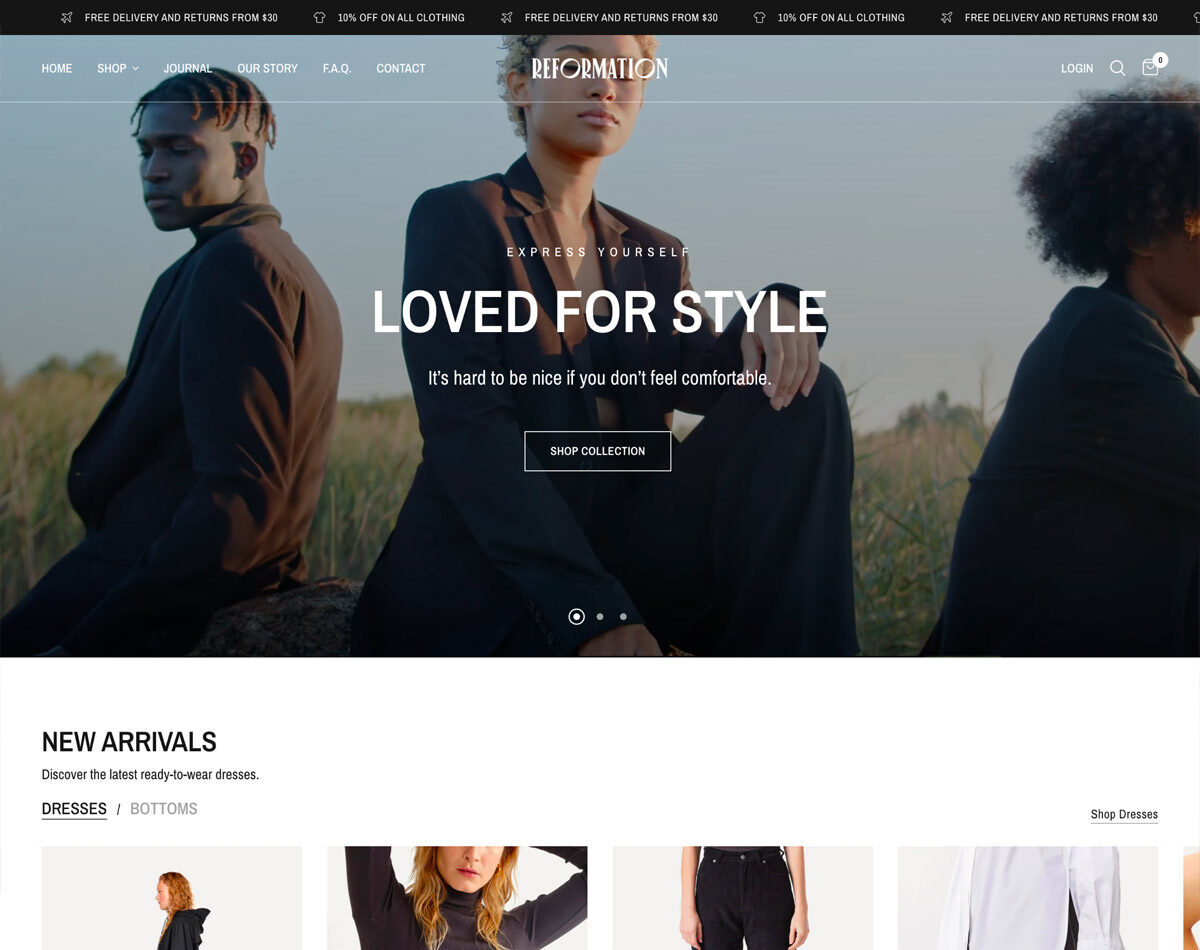
Why Reformation in 2026
Who is Reformation best for in 2026?
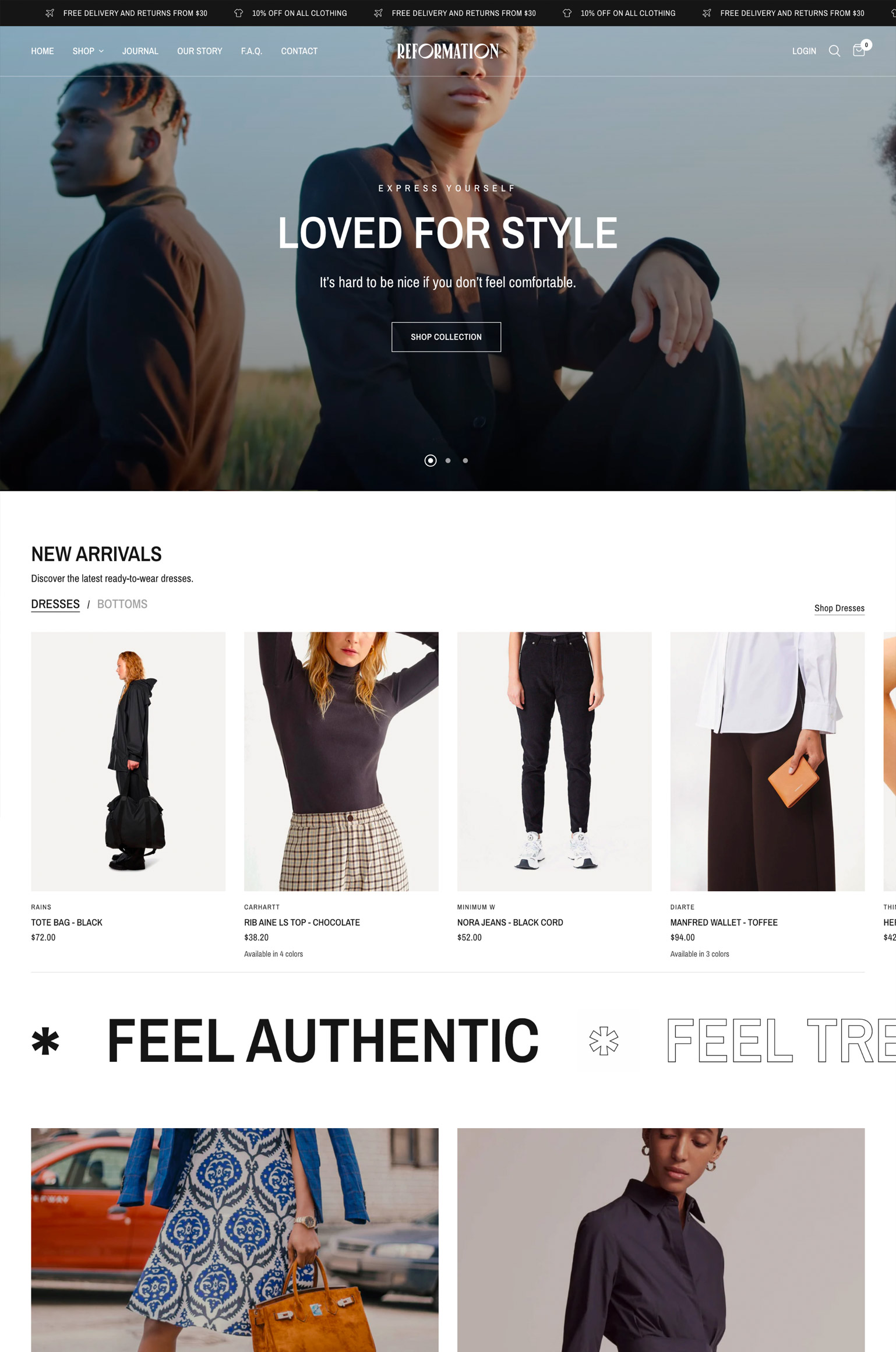
Reformation is the editorial fashion theme: clothing brands, footwear, accessories, lifestyle apparel. The theme leans into lookbook-style product pages, generous whitespace, and refined typography that frames fashion product photography. If your brand is fashion-adjacent (beauty, jewelry, premium home), Reformation works, but Habitat or Vision might fit the editorial pacing better. For pure fashion brands with multi-color variant strategies and seasonal drops, Reformation is purpose-built.
What is included with Reformation out of the box?
Reformation ships with OS 2.0 sections, lookbook-style product pages, collection-grid quickshop, swipeable variant gallery with per-variant imagery, sticky add-to-cart on mobile, inline size-guide accordion, fit reviews with customer photos, mega menu with image previews, cart drawer, customer wishlist, and metafield-driven product attributes. Six pre-built color schemes biased toward refined neutrals. No apps required for these features.
How does Reformation handle multi-color variant fashion catalogs?
Each color variant can carry its own image gallery, displayed automatically when the buyer selects the variant. Color swatches render above the fold on mobile, so the available palette is visible without scrolling. Variant-specific pricing and inventory display inline. For brands using Shopify's Combined Listings feature, Reformation renders the parent product page as a single URL with in-place swatching between children: the cleanest implementation of the multi-color fashion pattern. Size and color matrices handle 8+ colors by 10+ sizes without overwhelming the buyer.
Is Reformation still being updated for 2026?
Yes. Reformation receives quarterly updates aligned with Online Store 2.0 evolution and platform features. Recent updates: Combined Listings support, enhanced size guide UX on mobile, Core Web Vitals improvements on the product page, new section blocks for editorial campaigns and capsule-collection storytelling. Public changelog on the Theme Store listing. One-click install preserves all customizations.
What is the difference between Reformation and Vision?
Reformation is built for editorial fashion specifically: lookbook PDPs, multi-color variant flows, size-guide accordions. Vision is built for premium storytelling brands across any category, with long-scroll product pages and AI-tuned conversion patterns. Reformation wins for clothing, footwear, and accessories where size and color complexity matters. Vision wins for products where the story is the conversion mechanism, premium goods with rich brand narrative. Both are editorial in tone; the difference is whether the catalog is fashion-specific or category-agnostic.
Does Reformation support Shopify Markets for international fashion brands?
Yes. Shopify Markets (currency conversion, local payment methods, translated content, market-specific pricing) works natively with Reformation. The theme renders Markets' locale switcher in the header and respects market-specific catalog visibility. For fashion brands selling internationally, Reformation handles per-market sizing differences (US, EU, UK) via metafields, displaying the appropriate size system per market without requiring separate product configurations.