Vision
For brands that sell with story: long-scroll product pages, AI-tuned conversion blocks, OS 2.0 native.
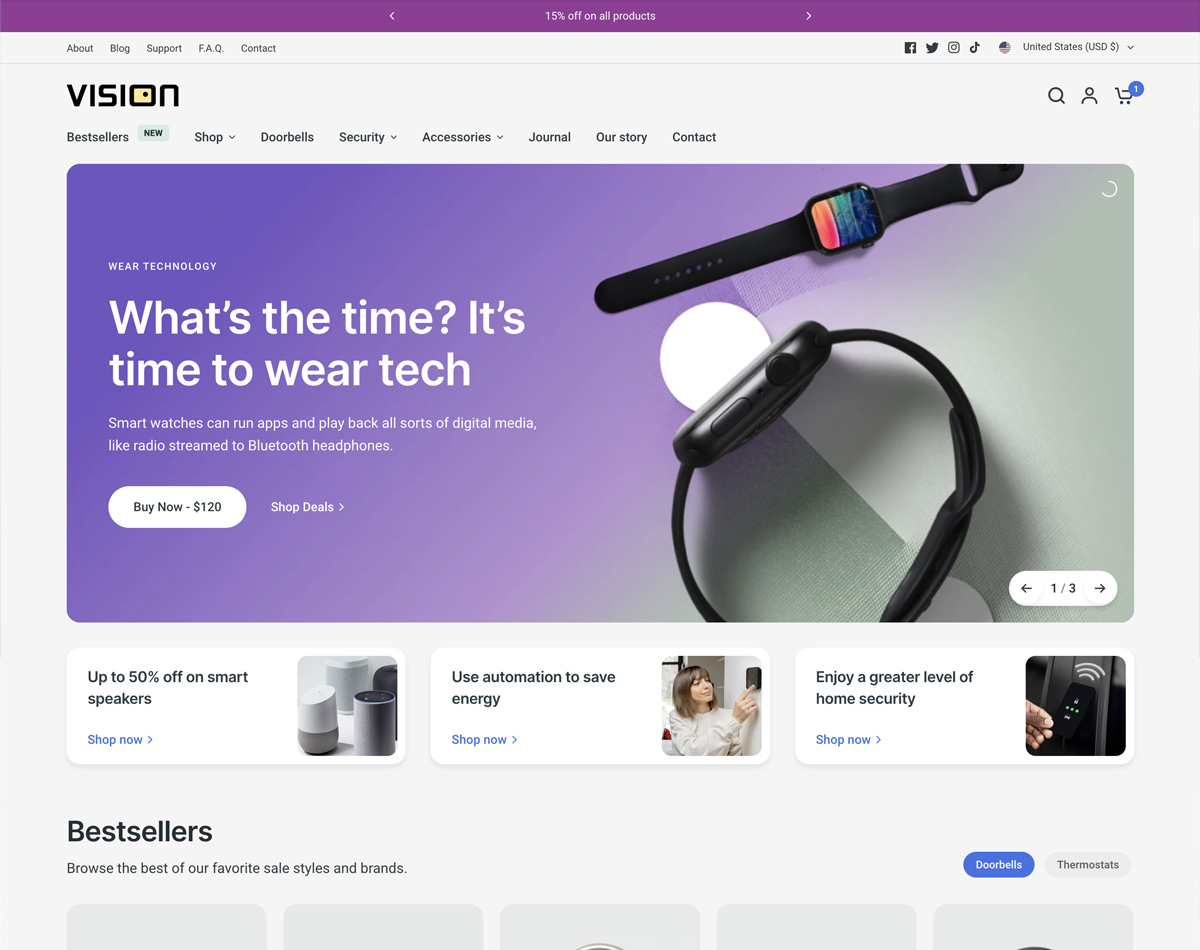
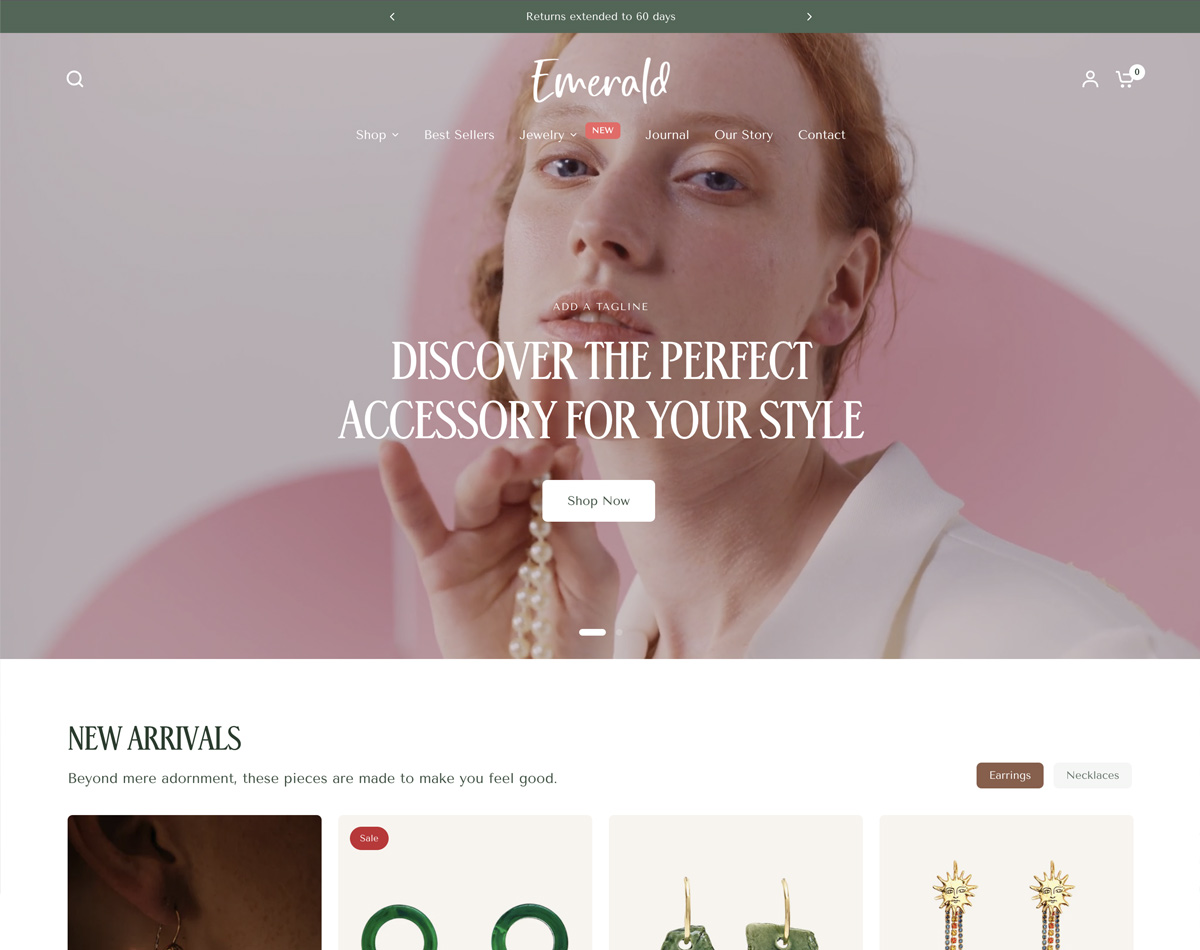
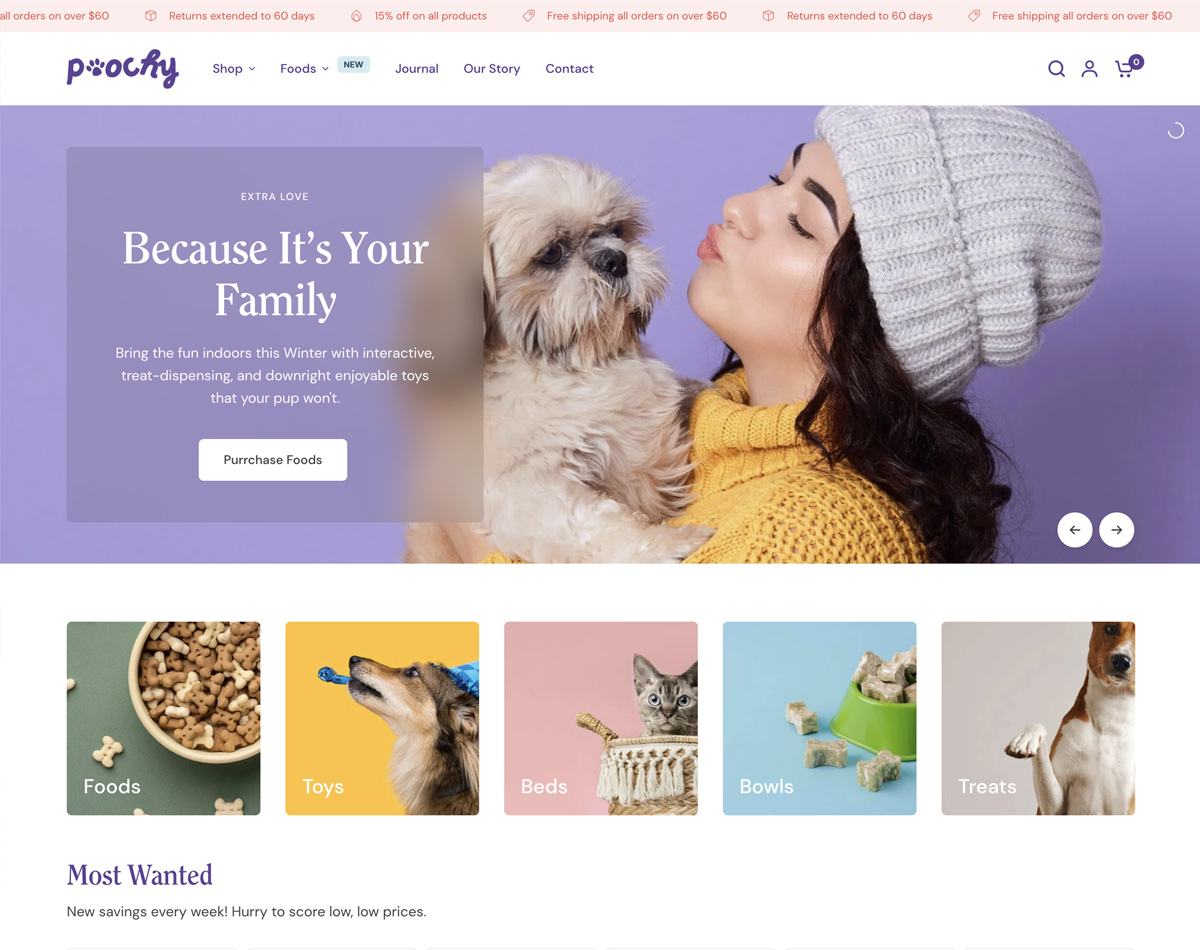
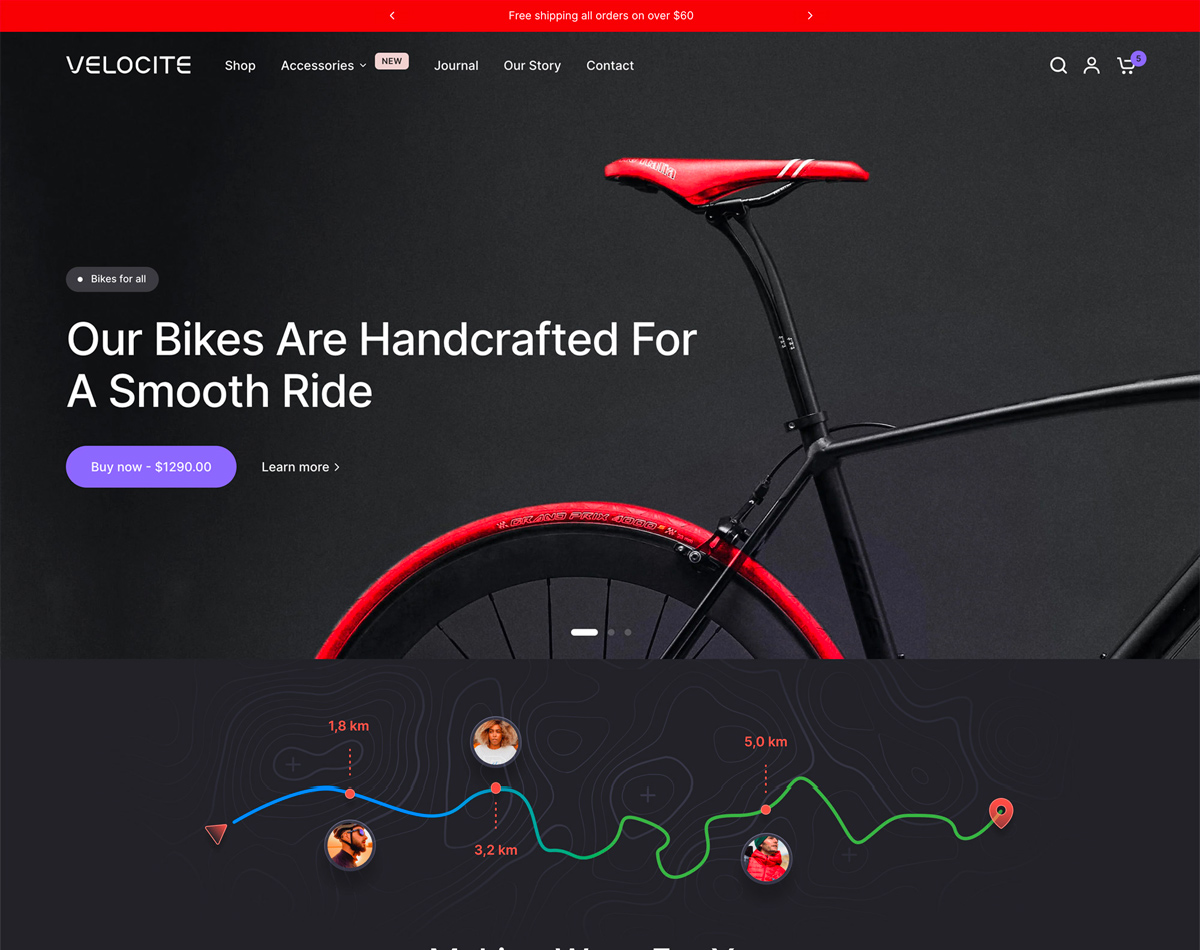
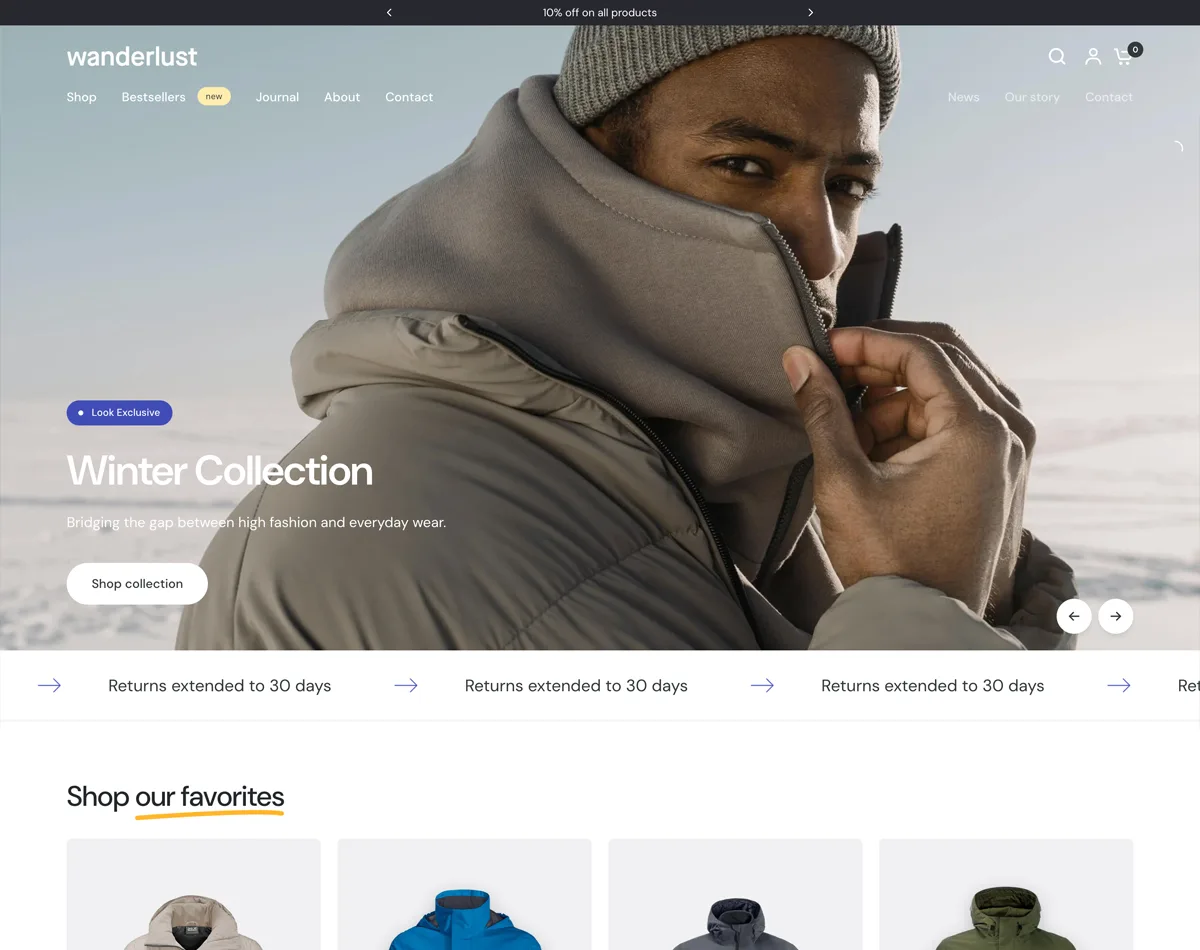
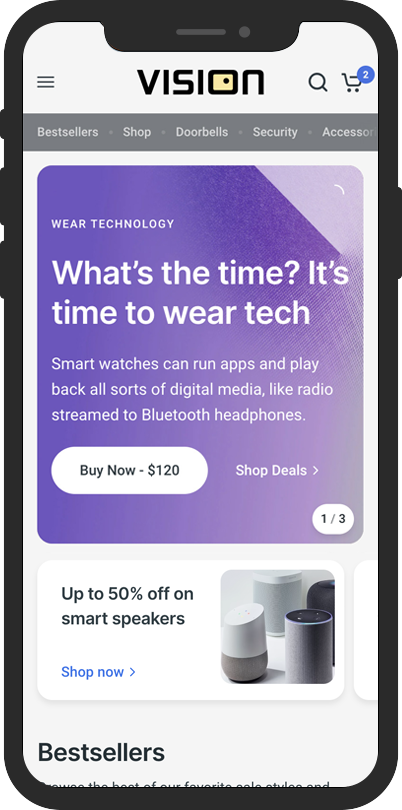
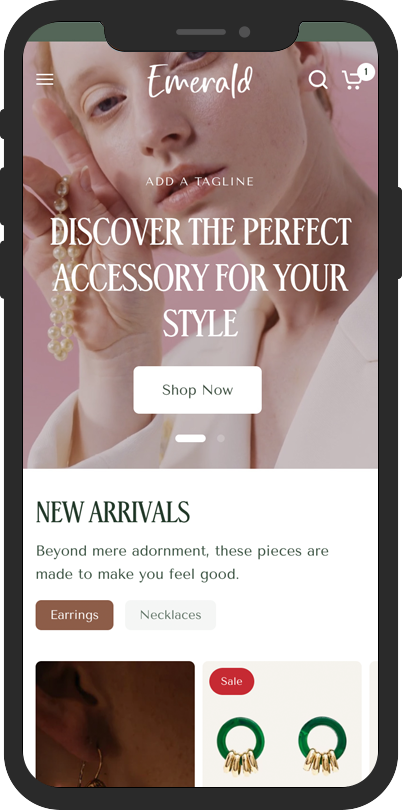
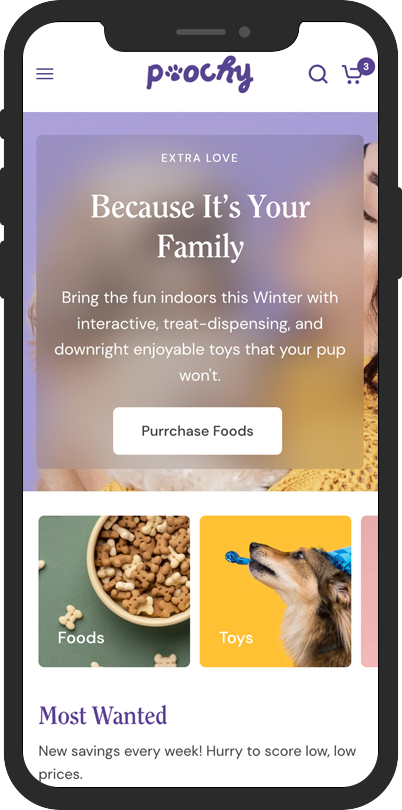
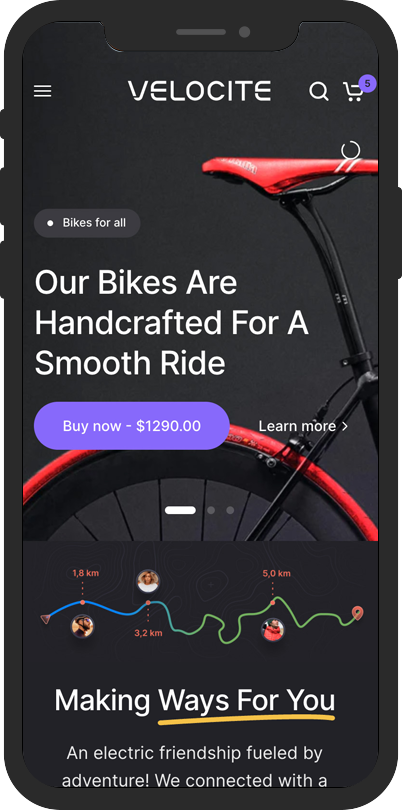

Features
Reviews
-
feature-availability
As a new Shopify merchant, it was very difficult for us to choose a theme, but the preset displays of Vision were so attractive that we bought it without hesitation. This theme has a very impressive response speed, and most importantly, there are many customizable sections, I really really love it.
-
customizability
I think this is the most cost-effective theme template. Vision has an absolutely rich variety of sections and beautiful designs. I like their preset sections very much, and their team updates templates very frequently. I definitely recommend it.
-
code-quality
The Vision theme on Shopify offers a clean, modern design that’s perfect for showcasing products with an easy-to-navigate layout. It provides a smooth shopping experience with responsive features for mobile devices. Combined with good customer support, it ensures that any issues are resolved quickly, enhancing customer satisfaction.
Example Screens
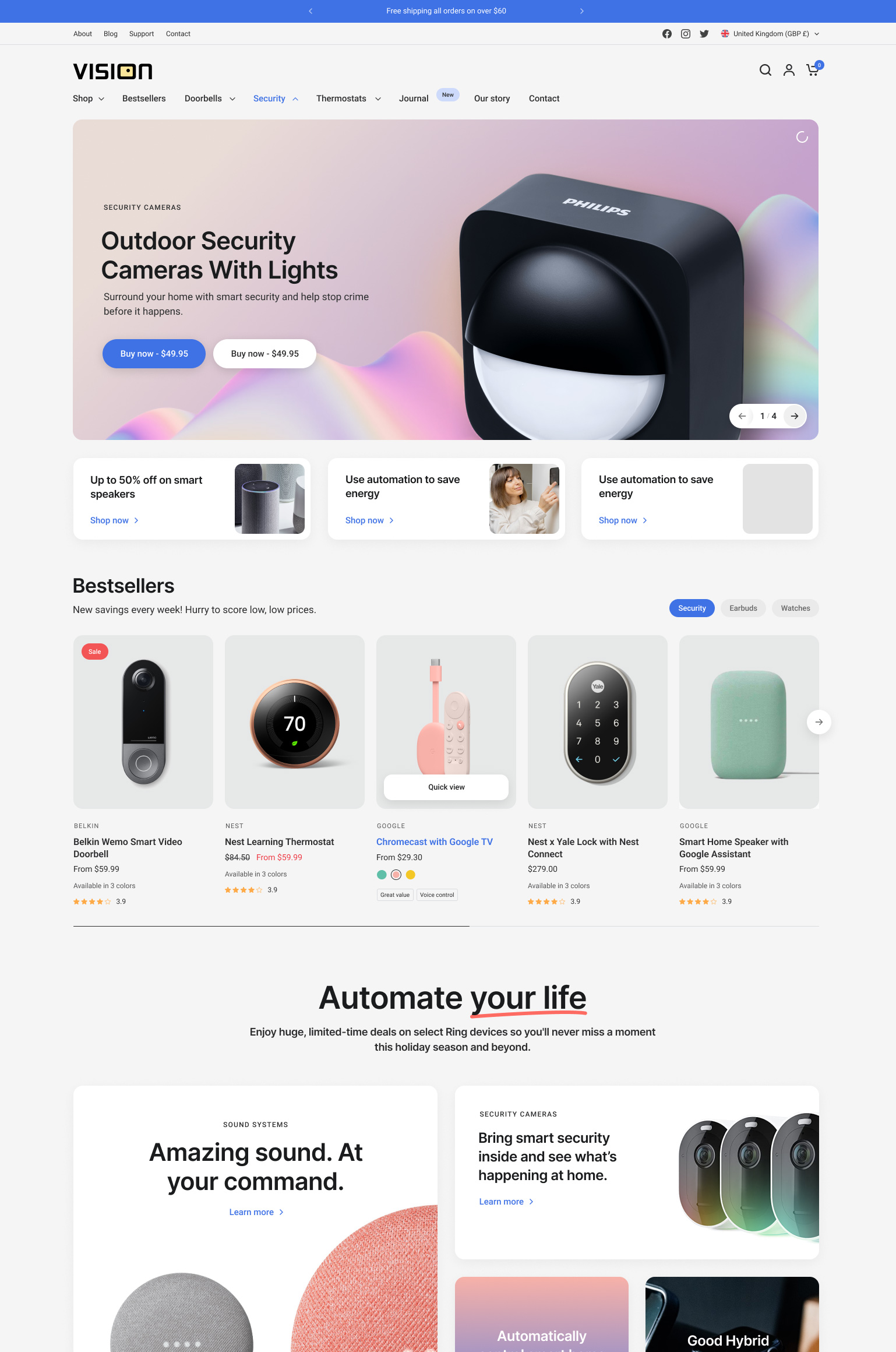


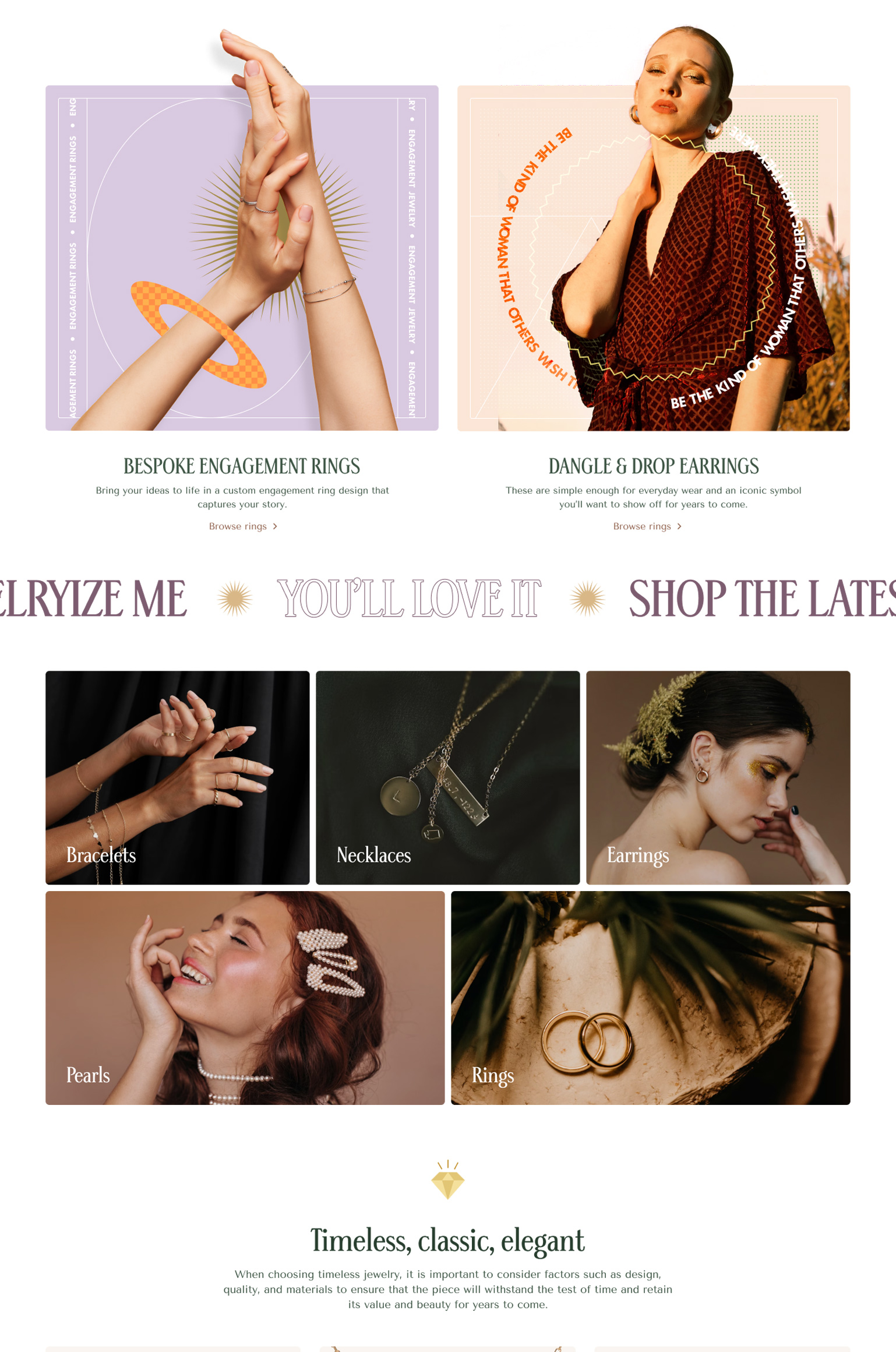
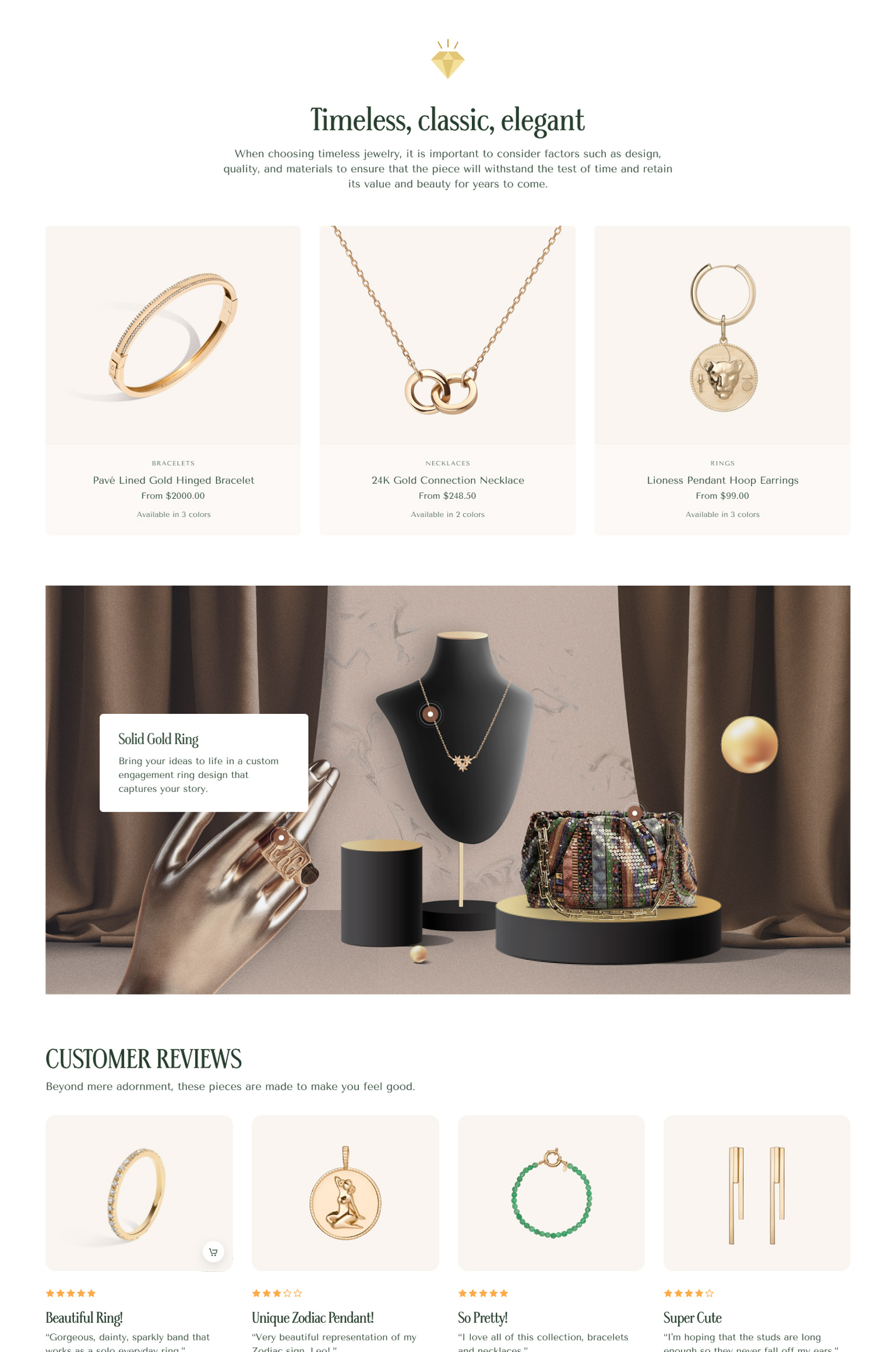
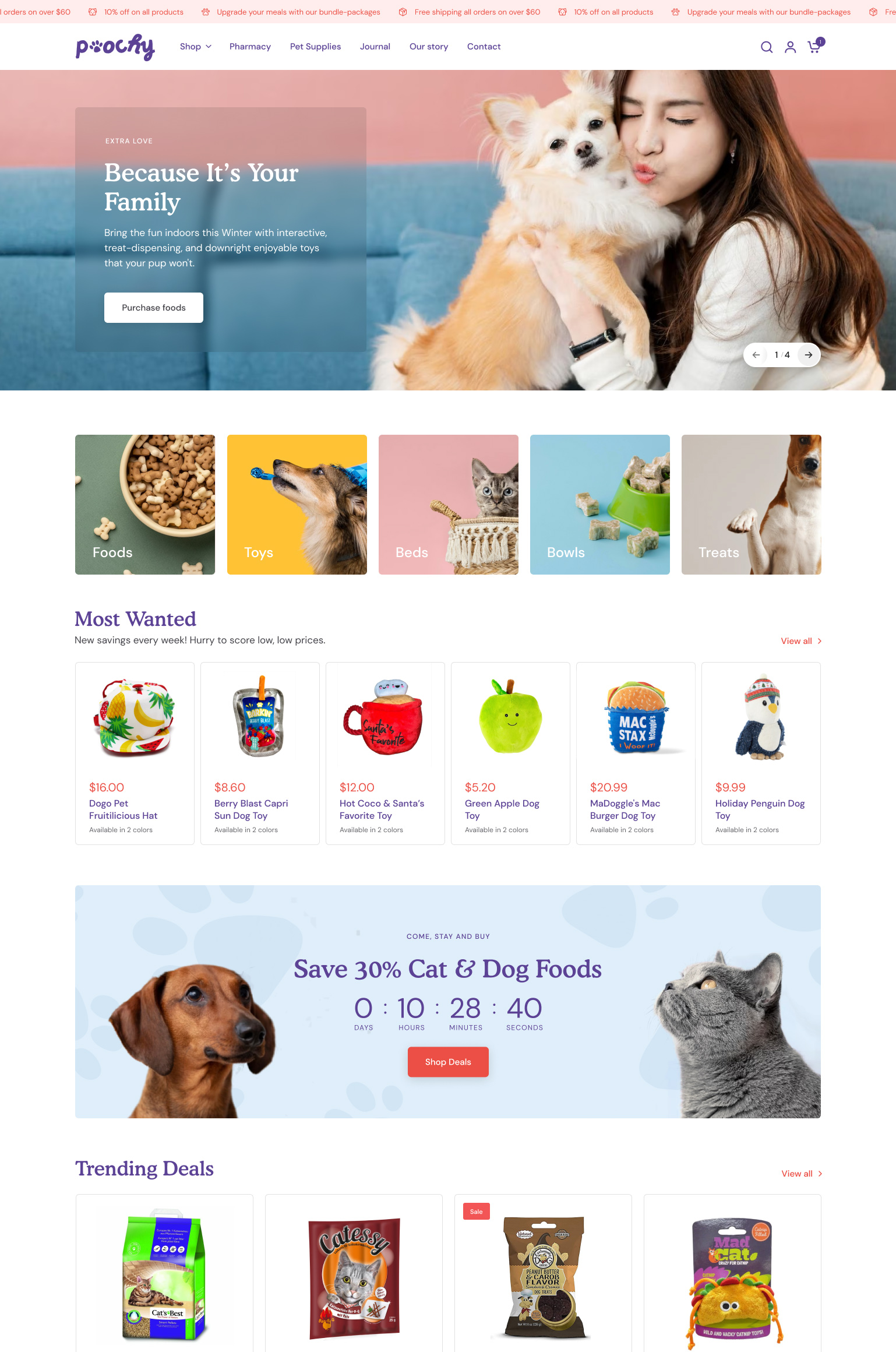
Why Vision in 2026
Who is Vision best for in 2026?
Vision fits premium brands where the product page reads more like an article than a transactional grid. Premium skincare with clinical claims, high-end electronics with feature-heavy storytelling, supplements with ingredient science, luxury goods with provenance stories, audio gear, premium beverages. The theme's long-scroll product page is the conversion mechanism: buyers absorb the story, then convert. If your products convert quickly on visual impact alone, Distinctive is faster. If your products convert on narrative depth, Vision is built for that pattern.
What is included with Vision out of the box?
Vision ships with OS 2.0 sections everywhere, long-scroll product pages with alternating image and text sections, AI-tuned conversion blocks (sticky cart, social proof, urgency cues), metafield-driven product specifications, customer review integration with photo support, cart drawer with cross-sell, mega menu with image previews, mobile-first responsive system, and configurable color schemes. The theme is designed to handle product pages that scroll for 3+ viewports without losing the buyer.
How does Vision handle long-form product pages without losing the buyer?
Vision's sticky add-to-cart bar appears once the buyer scrolls past the hero, so the conversion CTA is always one tap away regardless of how deep the buyer reads. Section blocks alternate image-and-text patterns to maintain visual rhythm, preventing the wall-of-text fatigue that kills long-form PDPs in other themes. Conversion blocks (testimonials, comparison tables, FAQ accordions) are interspersed between story sections, so trust signals appear at multiple scroll depths. The pattern has been tested across multiple premium categories.
Is Vision still being updated for 2026?
Yes. Vision is actively maintained on the Shopify Theme Store with regular minor releases. Recent updates: AI-tuned conversion-block enhancements, improved long-scroll mobile UX, Core Web Vitals tuning on image-heavy product pages, new section types for clinical-claim presentation and ingredient sourcing. Public changelog on the Theme Store. One-click installs preserve all customizations and content.
What is the difference between Vision and Pinnacle?
Vision optimizes for premium storytelling per-product: long-scroll PDPs, narrative pacing, AI-tuned conversion. Pinnacle optimizes for large-catalog navigation: advanced filtering, metafield-driven specs across hundreds of SKUs. Vision wins when the catalog is 20 to 100 SKUs and each product deserves a dedicated story. Pinnacle wins when the catalog is 200+ SKUs and filterable browsing is the primary discovery path. They are complementary: a brand could use Vision for hero products and Pinnacle for inventory-heavy lines, though running two themes simultaneously is not recommended.
Does Vision support clinical claims and structured product data?
Yes. Vision's product page handles structured claim data via metafields: ingredient sourcing, clinical study citations, regulatory disclaimers. Each claim category can have its own metafield definition, rendered automatically in the appropriate section of the product page. For premium skincare, supplements, and regulated categories, this structure is the difference between marketing copy and credibility. The metafield approach also feeds Yoast's schema graph for richer SEO snippets.